
Blog Summary:
Google Ads is Google’s paid advertising platform that helps businesses reach potential customers when they are searching for relevant products and services. This guide explains what Google Ads is, how it works, different campaign types, Google Ads costs, bidding, targeting, and practical optimization strategies.
What Is Google Ads?
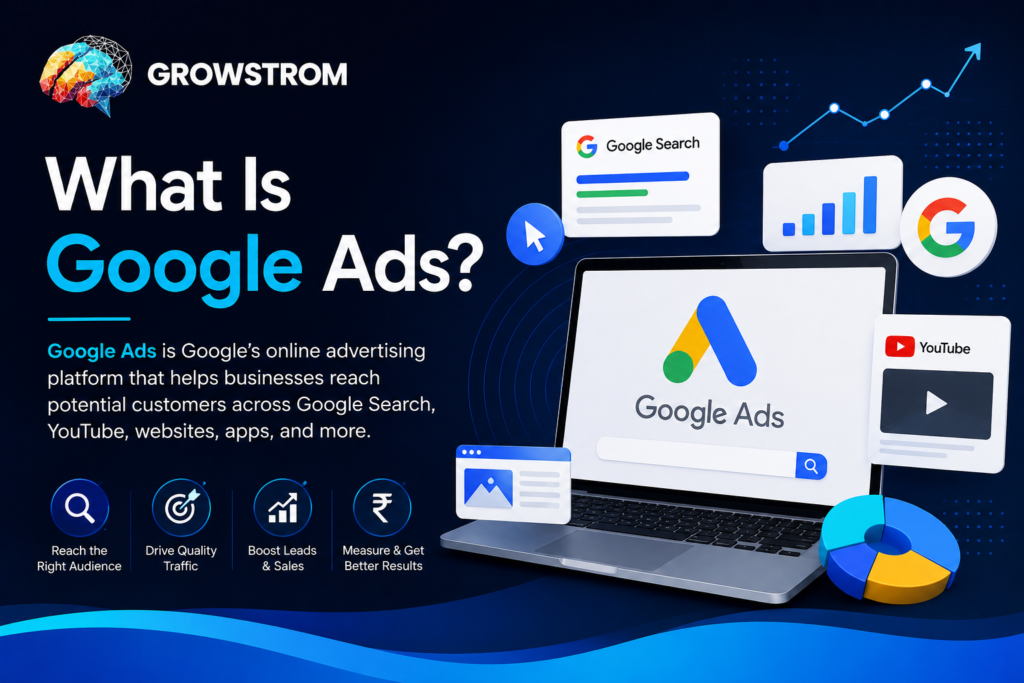
Google Ads is Google’s online advertising platform that allows businesses to promote their products and services across Google’s advertising network. Depending on the campaign type, advertisements can appear on Google Search, YouTube, websites, apps, Maps, Shopping surfaces, and other Google properties.
Unlike traditional advertising, Google Ads can help businesses reach people based on what they are actively searching for or other relevant targeting signals. For example, someone searching for “digital marketing services near me” may see an advertisement from a business offering those services.
This makes Google Ads particularly useful for businesses looking to generate website traffic, leads, sales, calls, or other measurable actions.
How Does Google Ads Work?
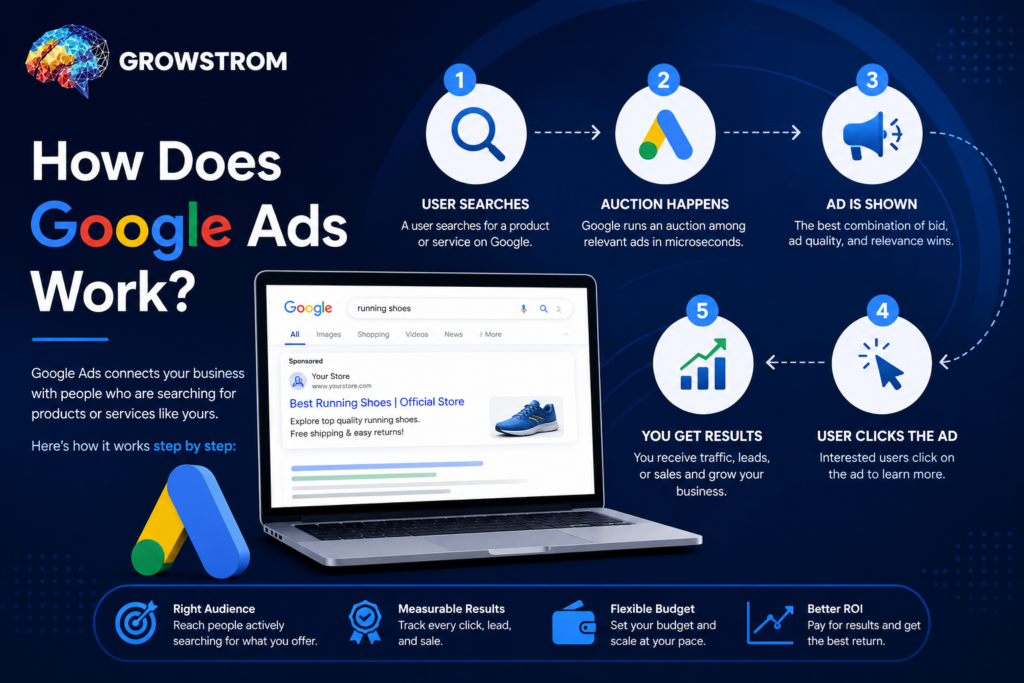
Understanding how Google Ads works starts with three important elements: keywords, targeting, and the ad auction.
1. Keywords Connect Businesses With Customers
Keywords are words or phrases advertisers associate with their products or services. Google uses these keywords and other signals to determine when an ad may be relevant to a user’s search.
For example, a cleaning company might target keywords such as:
- Home cleaning services
- Deep cleaning services
- Office cleaning near me
When users search for relevant terms, eligible ads may enter Google’s auction.
2. Google Runs an Ad Auction
Google doesn’t simply show the advertiser willing to pay the most. An auction takes place whenever an eligible search or other advertising opportunity occurs.
Google considers factors including the advertiser’s bid, ad quality, landing-page experience, relevance, and other signals when determining which ads are eligible and where they appear.
Therefore, having a large budget alone does not guarantee the best ad position.
3. Advertisers Set Budgets and Bids
Google Ads allows advertisers to set an average daily budget. Depending on the campaign and bidding approach, businesses can optimize toward goals such as clicks, conversions, conversion value, or visibility.
What Are the Different Google Ads Campaign Types?
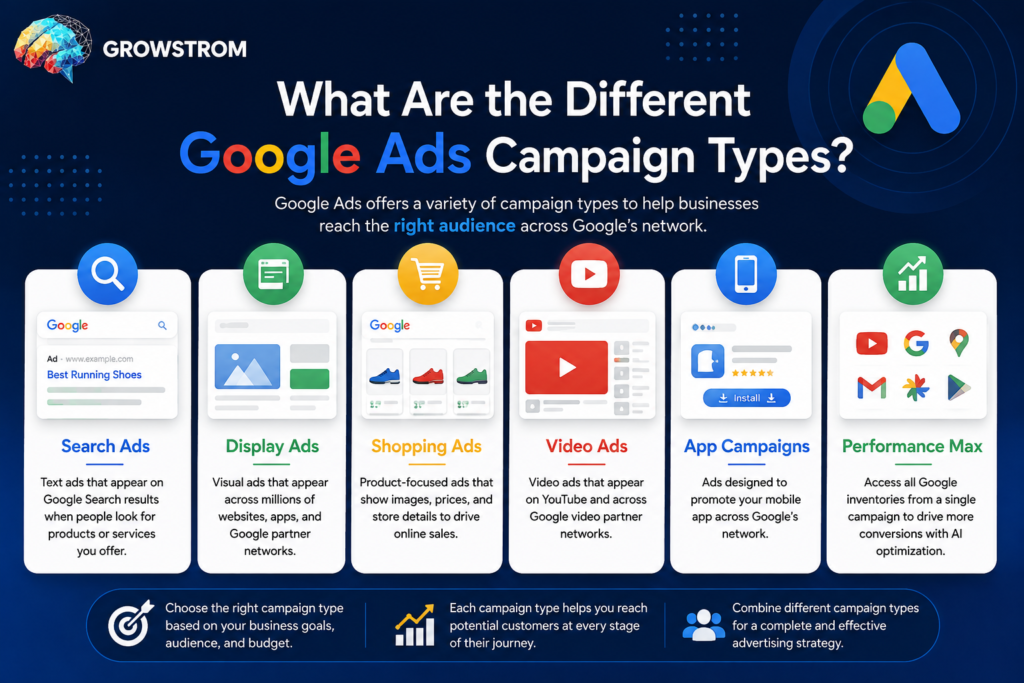
One of the important parts of learning how to use Google Ads is understanding which campaign type fits your objective.
Google Search Ads
Search campaigns display text ads when people search for products or services related to what a business offers. They are particularly useful for reaching users who already have an active search intent.
Display Ads
Display campaigns use visual advertising across websites, apps, and other Google properties. They can be useful for building awareness and reaching audiences while they browse online.
Video Ads
Video campaigns allow businesses to advertise through video placements, primarily across YouTube and relevant Google inventory.
Shopping Ads
Shopping campaigns are designed for ecommerce businesses and can showcase product information to potential customers.
Performance Max
Performance Max allows advertisers to access multiple Google advertising channels through a single campaign and uses Google’s automated systems to optimize toward specified goals.
The right campaign type depends on the business objective, audience, available creative assets, budget, and conversion goals.
How Much Does Google Ads Cost?
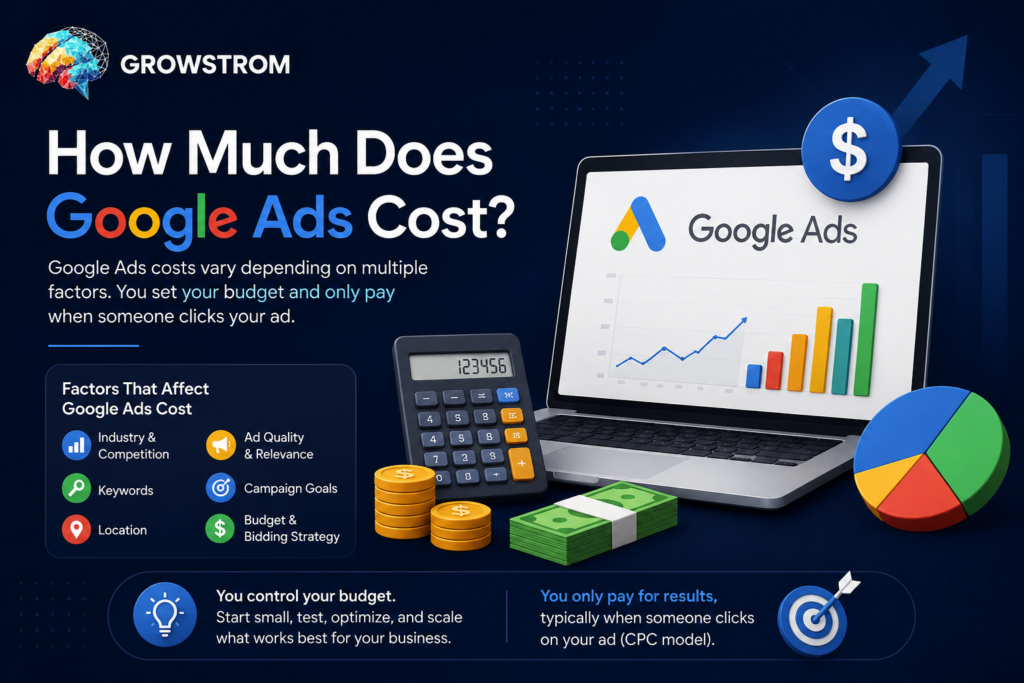
One of the most common questions businesses ask is, “How much does Google Ads cost?”
There is no universal fixed price. Google Ads costs vary depending on factors such as:
- Industry
- Competition
- Keywords
- Location
- Campaign type
- Target audience
- Bidding strategy
- Ad and landing-page quality
- Conversion goals
With cost-per-click (CPC) bidding, advertisers are generally charged when someone clicks an eligible ad. Advertisers can set an average daily budget and adjust it based on campaign performance.
This means a business can start with a budget that fits its goals and scale spending when campaigns generate profitable results.
What Are the Benefits of Google Ads?
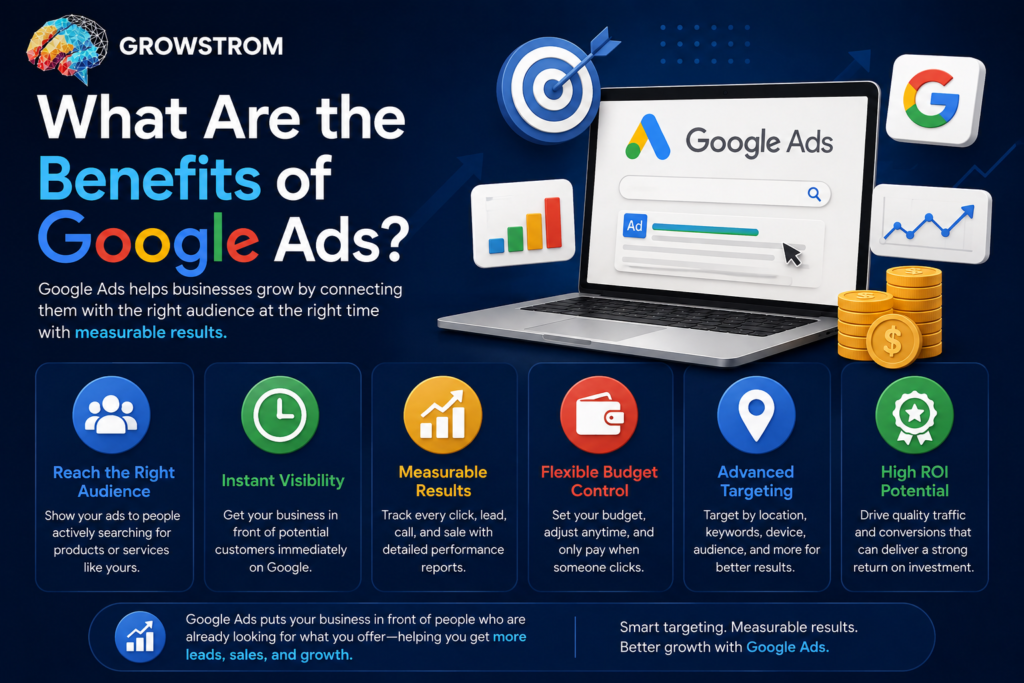
A well-planned Google Ads strategy can provide several advantages.
Reach Customers With Relevant Intent
Search advertising can place a business in front of people actively looking for related products or services.
Measurable Performance
Advertisers can track important actions such as purchases, sign-ups, calls, and other conversions using conversion tracking.
Flexible Budget Control
Businesses can define budgets and adjust them as campaign performance changes.
Faster Visibility
SEO can take time to build organic visibility. Google Ads can provide paid visibility when campaigns are eligible to serve.
Detailed Targeting
Google Ads provides different targeting and campaign settings that can help businesses reach relevant audiences based on factors such as location and other available signals.
How to Create a Google Ads Campaign
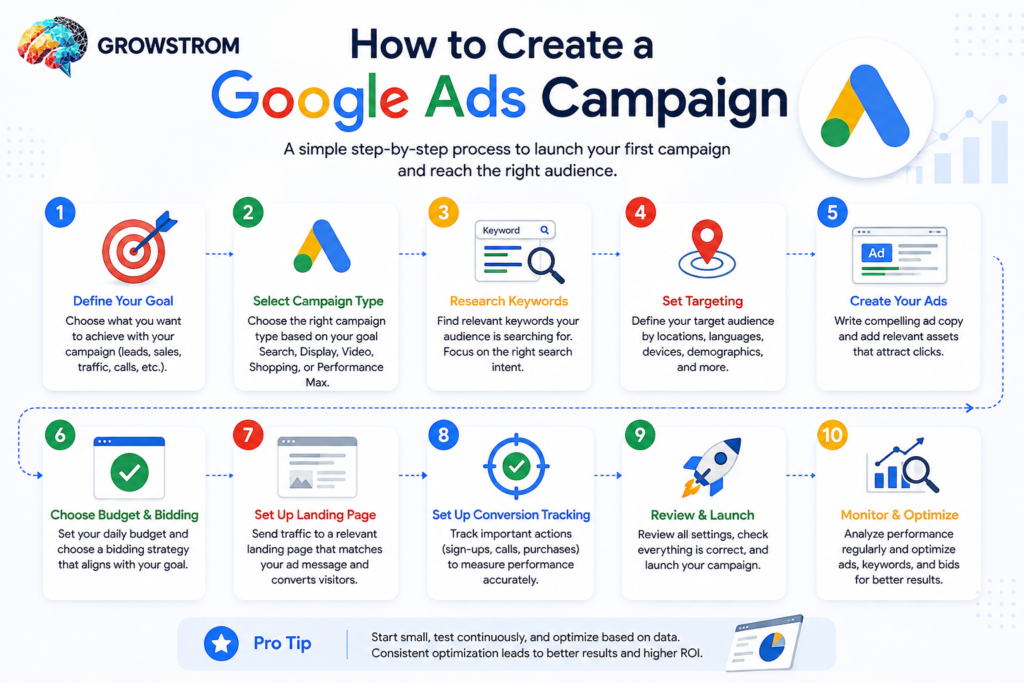
Creating a campaign starts with defining the business objective. Google recommends selecting a goal, choosing an appropriate campaign type, setting a budget and bidding strategy, creating ads, and configuring targeting.
A simple process is:
- Define your advertising goal.
- Select the appropriate Google Ads campaign type.
- Research relevant keywords and search intent.
- Set your location and audience targeting.
- Create relevant ads and assets.
- Choose an appropriate budget and bidding strategy.
- Connect the right landing page.
- Set up conversion tracking.
- Launch the campaign.
- Review performance and optimize regularly.
The setup should always be aligned with the actual business objective rather than simply generating as many clicks as possible.
Google Ads Bidding Strategies Explained
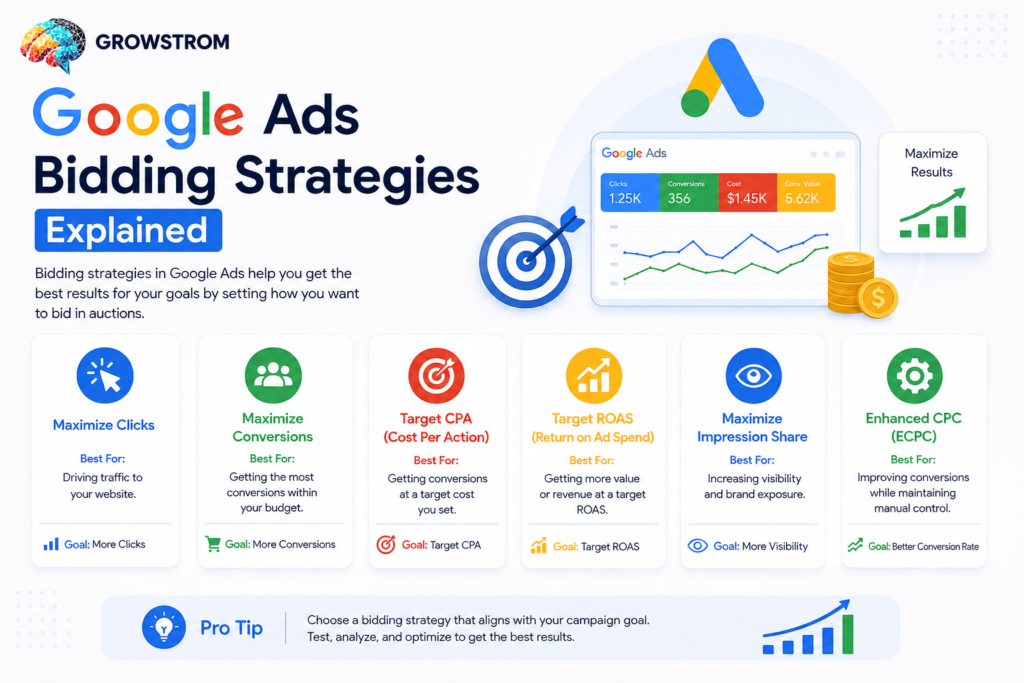
Google Ads bidding strategies help determine how your advertising budget is used.
For example, businesses focused on website traffic may choose a strategy designed around clicks, while businesses focused on leads or sales may use conversion-focused automated bidding.
Google’s Smart Bidding uses auction-time signals and Google AI to optimize bids toward conversion or conversion-value goals. Available strategies include options such as Target CPA, Target ROAS, Maximize conversions, and Maximize conversion value.
The best bidding strategy depends on your campaign objective, conversion data, budget, and business model.
How to Optimize Google Ads Campaigns
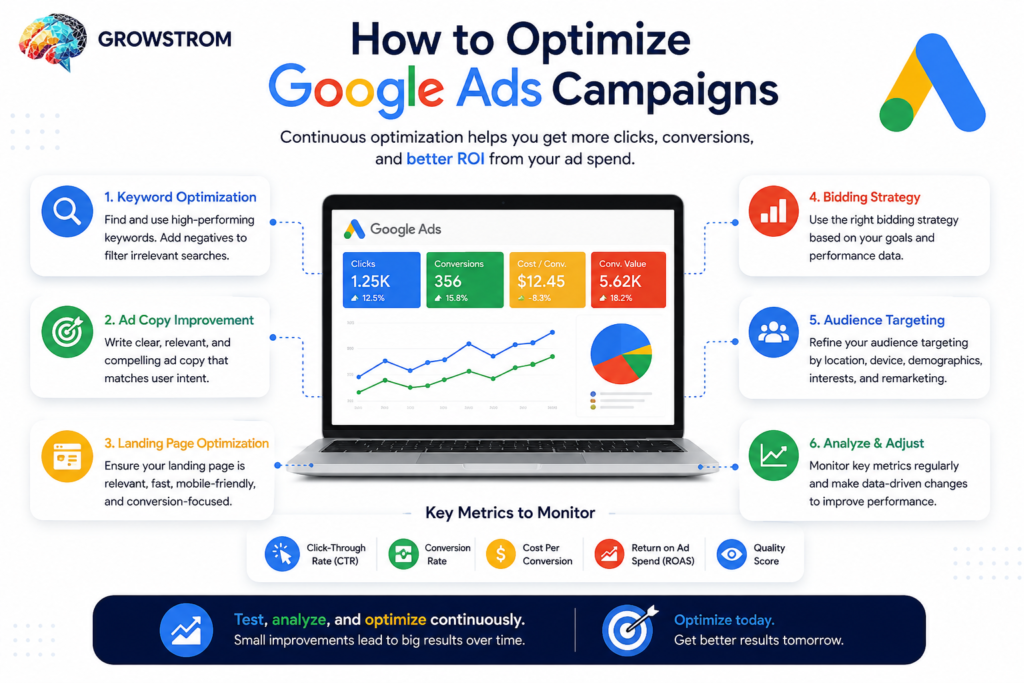
Google Ads optimization should be an ongoing process rather than a one-time task.
Some important areas to monitor include:
- Search terms and keyword performance
- Click-through rate
- Conversion rate
- Cost per conversion
- Ad relevance
- Landing-page performance
- Geographic performance
- Device performance
- Budget allocation
- Conversion tracking
Most importantly, don’t optimize only for clicks. A campaign receiving thousands of clicks but producing very few qualified leads may not be successful.
Google also recommends using conversion tracking to understand valuable customer actions and improve campaign performance.
Google Ads vs SEO: What’s the Difference?
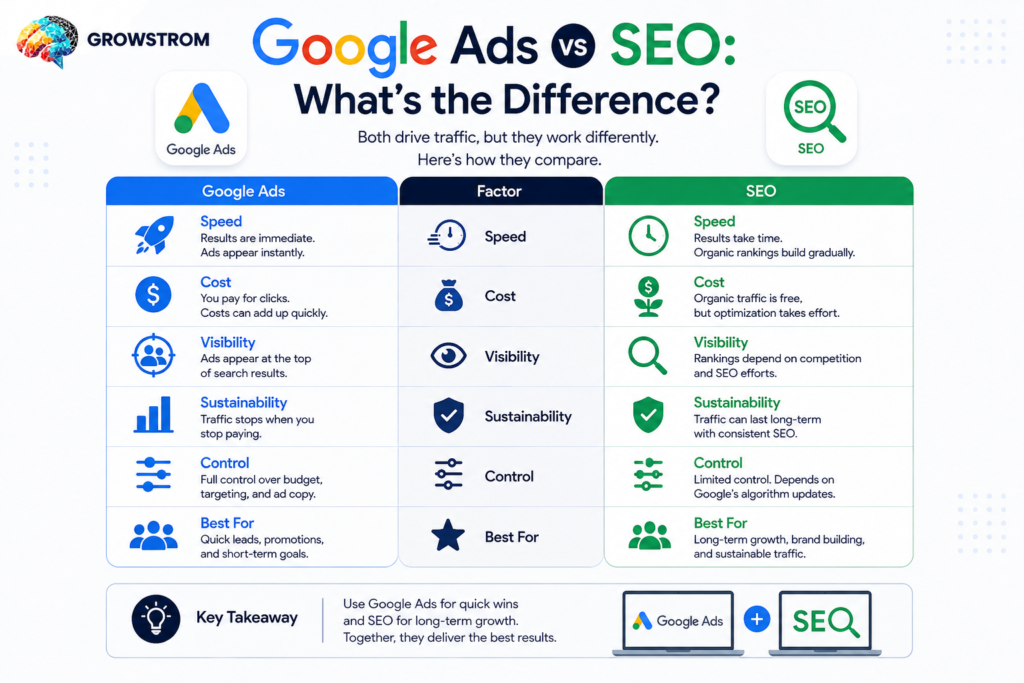
Google Ads and SEO can both help businesses gain visibility on Google, but they work differently.
Google Ads provides paid placements, allowing businesses to advertise when campaigns are eligible to serve.
SEO focuses on improving a website’s organic visibility in unpaid search results.
For many businesses, the strongest digital marketing strategy isn’t choosing one over the other. Google Ads can help generate immediate paid visibility and testing opportunities, while SEO can build long-term organic visibility.
Frequently Asked Questions About Google Ads
Is Google Ads worth it?
Google Ads can be worthwhile when campaigns target relevant searches, use appropriate budgets, have strong landing pages, and track meaningful conversions. Profitability depends on the business, competition, offer, and campaign execution.
How does Google Ads work?
Google Ads uses an auction system to determine which eligible advertisements appear and where they appear. Factors include bids, relevance, ad quality, landing-page experience, and other auction-time signals.
How much should I spend on Google Ads?
There is no universal budget. Your starting budget should depend on your market, keyword costs, conversion rate, customer value, and advertising objectives.
What are Google Search Ads?
Google Search Ads are text-based advertisements that can appear on Google Search when users search for relevant products or services.
How can I improve Google Ads performance?
Start with accurate conversion tracking, relevant keywords, strong ad messaging, appropriate targeting, effective landing pages, and continuous performance analysis.
What is the difference between Google Ads and SEO?
Google Ads provides paid advertising placements, while SEO focuses on improving organic search visibility. Both can complement each other as part of a broader digital marketing strategy.
Conclusion
Google Ads can be a powerful way for businesses to connect with potential customers at important moments in the buying journey. From Search Ads and Display campaigns to Performance Max and other campaign types, businesses have multiple ways to reach relevant audiences.
However, successful advertising isn’t simply about increasing your budget. Effective Google Ads strategy requires the right keywords, campaign structure, targeting, bidding, compelling ads, relevant landing pages, and accurate conversion tracking.
When these elements work together, Google Ads can become a measurable channel for generating qualified traffic, leads, sales, and business growth.

Digital Marketing Strategist at Growstrom
Prashant Kumar is a Digital Marketing Strategist at Growstrom, specializing in SEO, Local SEO, Google Ads, Meta Ads, and digital marketing strategies. He works on practical search optimization and lead-generation strategies to help businesses improve their online visibility, website traffic, and qualified leads.